The Cask of Amontillado Reading in Elements of Literature Book 9th Grade
Equally you prepare for the AP Literature examination, i of the things you'll accept to do is get an adept in a few literary works that you can employ on the composition portion of the exam. Nosotros recommend that you choose four to v notable works with different genres and themes to make sure you tin can write an amazing student choice essay. (Actually...practicing analyzing literature will help y'all on the whole exam, not just the written portion, and so it's a win-win situation!) But just because these works have to be "notable" with "literary merit" doesn't mean they need to be dull, also! That's why nosotros're talking about Edgar Allan Poe's short story, "The Cask of Amontillado," as a good selection for your AP exam. Non just is it widely recognized equally an excellent piece of literature, it's got a piffling of everything: horror! Suspense! A surprise twist! And equally an added bonus...information technology'south short. To bring you up to speed, nosotros'll start with "The Cask of Amontillado" summary, then we'll bound into grapheme and thematic analyses. By the time you lot cease this article, you'll exist able to write fearlessly nigh "The Cask of Amontillado" on your AP exam. A photograph of Edgar Allan Poe. Critics consider Edgar Allan Poe to exist the begetter of the detective story (thanks to "Murders in the Rue Morgue," which predates the Sherlock Holmes stories past more than l years!) and a pioneer of the American brusk story. Just despite his literary success, Edgar Allan Poe's life was marked by tragedy. Orphaned only a yr after his birth in 1809, Poe was taken in by John and Frances Allan (who weren't blood relatives). Frances Allan and Poe fought oft, usually over money, and Poe would flirt with poverty throughout his life...especially afterward he was cut out of John Allan's volition. Poe tried to go to higher but couldn't pay for it, so he dropped out. This was a blessing in disguise, since information technology kicked off Poe's writing career. Fueled by both his passion and the expiry of his older brother, Poe moved back to Baltimore to go a full-fourth dimension author. There, he married his cousin—Virginia Clemm—who was merely 13 at the fourth dimension of the union. (Poe was 26!) By all accounts, the couple was happy until Virginia's death 13 years subsequently. Poe would never recover from her death and would pass away 2 years subsequently, before long after turning 40 years erstwhile. Poe's life might have been brusque, simply his writing has lived on. Although Poe was a poet, literary critic, essayist, short story author, and novelist, he is most well-known today for his grisly stories of terror and the macabre. Most of Poe's works autumn into the Gothic genre, which is characterized past a sense of terror, doubt, and the uncanny. The genre was incredibly pop in the 18th and 19th centuries, and Poe's writing would make him one of the all-time-known writers of Gothic horror. "The Cask of Amontillado" is 1 of Poe's most famous short stories, and it was originally published in 1846 in Godey's Lady Book, the most popular periodical in the United States at that time. Though scholars aren't 100 percent certain what inspired Poe'due south short story, many believe information technology's based on a story he heard while stationed at Fort Independence in Massachusetts in 1827. At that time, Fort Independence had a statue of Lieutenant Robert Massie, who had been killed in a sword duel following a card game, on the bounds. As legend has it, subsequently Massie'southward death, other soldiers took revenge on his murderer by getting him boozer and permanently sealing him in a vault...alive. A more popular theory is that Poe wrote "The Cask of Amontillado" in response to his personal rival, Thomas Dunn English , who had written a scathing critique of ane of Poe's novels. "The Cask of Amontillado" skewers elements from English'south novel, 1844, including making references to the same secret societies and subterranean vaults featured in English'south piece of work. Others believe that "The Cask of Amontillado" was inspired not past a person, but by a widespread fright of being buried live. Considering medicine was in its infancy, sometimes coma victims were assumed to be dead and were buried accordingly, just to awake in their coffins days later. People started inventing easy-open coffins, burying vaults with windows, and fifty-fifty coffins with animate tubes fastened to save people who were prematurely buried. And of course, the fear of being buried alive—just to die in your own coffin—is echoed in the plot of "The Cask of Amontillado." Regardless of what inspired Poe to write "The Cask of Amontillado," the fact remains that this brusque story remains one of his near famous and enduring works of Gothic terror. Now that you lot know a picayune bit almost the background of Poe'south curt story, let'south take a look at the plot of the text. (You lot can find a gratis, legal copy of "The Cask of Amontillado" online by clicking here.) Poe'south curt story actually takes place in two time periods. The bulk of the events occur on the night of Carnaval, which is a Western Christian commemoration that takes place before Lent. Carnival is a celebration of excess—of food, drink, and fun—before the brake of the Lenten season sets in before Easter. (In the United States, the Carnival season is better known equally Mardi Gras.) But the story is told in retrospect past the narrator, Montresor, l years later on the issue to an unknown listener (only referred to equally "y'all" in the story). That ways that at that place are really 2 different time frames happening in "The Cask of Amontillado." Readers larn that Montresor is planning to have revenge on his ane-time friend, Fortunato. Readers never larn exactly what Fortunato has done to Montresor to push him over the border, only that Montresor feels he is the victim of a "thousand injuries" and i unnamed "insult" he must avenge. Readers also acquire that Montresor has hidden his rage in order to convince Fortunato that they are even so friends—which is all part of his plan. On the dark of Carnival, Montresor puts his programme into activeness. He knows that Fortunato considers himself a vino connoisseur, and so Montresor isn't surprised that Fortunato is already drunk when he finds him in the middle of the Carnival celebration. Montresor tells him about a pipage, or about 130 gallons, of Amontillado he bought. (Amontillado is a fine sherry wine.) But now that he has the wine, Montresor is afraid that he was duped. He tells Fortunato that he was on his way to discover Luchresi—another wine connoisseur—to assistance him decide the wine'south authenticity. Montresor'south ploy works. Montresor knows that Fortunato is full of himself, and the idea that someone could guess the Amontillado pricks his ego. As a outcome, Fortunato insists on checking the Amontillado himself. Montresor one-half-heartedly tries to dissuade Fortunato, telling him that going into the catacombs, or cloak-and-dagger vaults where generations of the Montresor family are cached, will worsen Fortunato's caput common cold. Fortunato waves off Montresor's concerns, maxim that he "shall not die of a coughing," and he follows him into the vaults to taste the Amontillado anyhow. As the men venture further into the nighttime, underground passageways, Montresor makes sure that Fortunato keeps drinking. Fortunato asks about the Montresor family'south glaze of arms, and Montresor tells him that their family motto is "Nemo me impune lacessit," or "no one attacks me with dispensation." Fortunato is so drunk that he misses the warning in Montresor'southward words, and instead asks whether Montresor is a member of the masons, a fraternity with an elite membership. Montresor says yeah and holds up a mason'south trowel, implying that he's a literal mason instead. Fortunato thinks Montresor is joking, and past the time they arrive at the niche where Montresor says he's stored the Amontillado, he's too drunk to notice that there's no wine within. He doesn't fifty-fifty resist as Montresor bondage him to the wall. Montresor then reveals the bricks and mortar he has stored in the vault, and he begins to wall upwards the opening to the niche...with Fortunato chained within. The process is a long one, and Montresor describes Fortunato's fearful cries and attempts to pull gratis from the bondage. But Montresor is adamant, and he throws a lit torch into the niche with Fortunato before he finishes walling him in alive. By this betoken, Fortunato is panicked. He'south screaming for help, but the pair are and then far undercover that there's no one to hear him. He tries to appeal to Montresor'southward logic, saying that he'll be missed by "Lady Fortunato and the rest." Montresor is unmoved, finishes sealing upward the vault, and leaves Fortunato there to dice. Montresor finishes his story by telling the listener that at that place Fortunato's bones remain, fifty years afterward. 1000 ninha/Flickr Read on for an in-depth analysis of the major characters in "The Cask of Amontillado." Fortunato's name means "the fortunate one" in Italian, which is ironic given that he ends up bricked within the Montresor catacombs and left to dice. This is just one example of the dramatic irony that permeates the short story. Dramatic irony is when the reader knows something that one or more than of the characters don't know. In this instance, readers know what Montresor plans to practice, but Fortunato remains ignorant. This creates tension in the curt story. As a reader, you desire to yell at Fortunato to run away, but you lot tin't. The thrill of "The Cask of Amontillado" comes from knowing exactly what will happen and being powerless to stop it. Other than the fact that he seems to accept wronged Montresor somehow, readers learn very little about Fortunato straight. Everything we know nigh his character we take to infer from Montresor's descriptions of Fortunato and his actions. For example, we know Fortunato thinks he and Montresor are friends, and they likely were at one point. But we also know that Fortunato is "rich, respected, admired, beloved," and happy, according to Montresor, at least. But he also seems to be egotistical and self-indulgent; he drinks to excess, has no qualms talking badly well-nigh other people (like Luchresi), and thinks he's the best vino connoisseur around. Ultimately, whether or not Fortunato's character flaws are enough to warrant Fortunato's fate is up for readers to decide. Montresor is the main graphic symbol of "The Cask of Amontillado," and the story is told in outset person from his perspective. Like Fortunato, readers know very little about Montresor'southward backstory outside of what they can infer from the text. For example, Poe implies that Montresor seems to come from coin—he lives in a palazzo, which is basically an Italian palace, which has its ain catacomb. But Montresor's deportment tell readers fifty-fifty more than almost his character. Offset, he's driven by revenge. He doesn't take insults lightly, and he'due south able to nurse a grudge to an extreme degree. He'southward likewise witty—he makes double entendres near Fortunato's decease that the latter never catches—and knows how to plan ahead, too. Merely most importantly, he lacks remorse. At the end of the story, Montresor ends with an exclamation, "In pace requiescat," which ways "rest in peace." Montresor is proud of what he'south done...and even prouder that he hasn't been defenseless. As a event, his final wish for Fortunato comes across equally sarcastic rather than sincere. All of this together makes readers question Montresor'due south role in the story. At the beginning, he seems similar he'due south the protagonist: he's a man who's been terribly wronged looking for revenge. Simply by the end of the story, it's not clear whether Montresor is the story's hero...or its villain. Luchresi never appears in the story, simply he plays a vital role in Montresor's plan. Luchresi is conspicuously one of Fortunato'southward rivals, if non in reality, then at least when it comes to his expertise in wine. Montresor plays this rivalry to his advantage. He keeps mentioning Luchresi'due south proper name to motivate Fortunato and keep him interested in the Amontillado, especially since he's drunk and his attending keeps wavering. (Go on in mind that Luchresi is an innocent bystander in all of this—Montresor is just borrowing his name and reputation.) Poe uses the mention of Luchresi's name to remind Fortunato—and the readers—what's happening. Like we mentioned before, "The Cask of Amontillado" is a story told in retrospect. An older Montresor is speaking to an unnamed listener, recounting how he killed Fortunato in revenge. Readers know nothing virtually the listener, only that he's Montresor's audition in telling the story. But from an analysis standpoint, the listener is important. Information technology reminds united states of america that Montresor is telling this story to someone else, and in doing so, trying to communicate his personal perspective. It makes readers question whether Montresor is telling the whole truth, likewise. Was Fortunato really as bad every bit Montresor says he was, for example? Because the story is told from Montresor'south perspective—and probable with an agenda in mind—readers are left wondering if Montresor's account is totally accurate. Brandon Heyer/Flickr "The Cask of Amontillado" is considered one of Poe's all-time brusk stories, and with skillful reason: it melds tension, horror, and surprise together masterfully. But what are the letters of Poe's story? Let's expect at 3 of major themes of "The Cask of Amontillado" beneath. Think of a fourth dimension that you lot did something you knew your parents would punish yous for. When y'all explained the situation to your parents, how did you do it? More than likely, you lot tried to downplay your deportment (without lying!) to brand the consequences a footling less severe. This is a good example of how perspective matters. For your parents, what you did is a serious offense. But if y'all could just offer a dissimilar perspective on things, possibly you lot won't be grounded for quite so long! In "The Cask of Amontillado," readers are presented with Montresor'due south perspective of the story. He tells readers he's been wronged—for what, he doesn't say—and paints an unflattering picture of Fortunato. Even though Montresor says he's rich and well liked, Fortunato's deportment make him seem similar a stuck-up, overindulgent idiot. Just is that accurate? Because we just get Montresor's side of the story, it's hard to know. It'southward upwards to the reader to decide how reliable, or trustworthy, Montresor is as a narrator. Exercise nosotros believe him and his argument that killing Fortunato was the only mode to accept his revenge? Or is Montresor just a cold-blooded killer? By making the readers enquire these questions, Poe draws attention to the thought that people's individual perspectives on a situation aren't necessarily 100 percentage accurate. Although Montresor is responsible for Fortunato'south death, the latter has a hand in sealing his ain bury, as well. Even though he'southward drunk and sick, the mention of Luchresi's proper noun triggers Fortunato's massive ego. The idea that anyone could be amend than him—especially Luchresi, who can't "tell Amontillado from sherry"—drives him to follow Montresor into the catacombs. Despite wanting to kill Fortunato, Montresor gives his victim many chances to plough back. Montresor cites Fortunato'southward cough, maxim that it might be all-time to ask for Luchresi'south help instead. Just each time, Fortunato says he wants to push forward considering he cannot stand up Luchresi getting credit for determining whether the Amontillado is accurate. Information technology's his pride that makes him want to vanquish Luchresi, merely in the end, it'south his pride that makes him lose. Mayhap the scariest attribute of "The Cask of Amontillado" is how far Montresor goes for revenge. In many means, what Fortunato has done to warrant Montresor's wrath is immaterial; Poe is more than interested in how revenge drives a man to extremes. In this case, it'due south clear that Fortunato'south perceived wrongs take dominated Montresor's thoughts and actions. His program to kill Fortunato is highly premeditated: he's conspicuously put a lot of thought into how he will do it, right down to making sure he has bricks and mortar handy to entomb Fortunato live. This is not a spur-of-the-moment, in-the-heat-of-passion action. No, Montresor has thought long and hard about his programme. Given this, Poe shows readers how powerful the need for revenge can be. Northot simply tin can information technology drive people to extremes, it tin warp their sense of reason, too. After all, short of murder, what insult could Fortunato accept delivered to warrant such a gruesome death? Could it be that Montresor'south desire for vengeance, rather than Fortunato'southward actions, are what allows Montresor to justify murder? Ultimately, because the whole story is written from Montresor'southward perspective, Poe doesn't give readers any clear answers. Only in doing and then, Poe also shows how the truth is oftentimes obscured by people's perceptions and motivations. It's nifty that you're preparing for the composition part of the AP Literature exam, but don't forget that at that place's a multiple choice section, as well. Go the skinny on the multiple pick department—and how to ace information technology!—here. I of the best means to practice for any exam is to take practise tests. Did yous know that there are do exams for AP tests, too? Hither'south a list of exercise tests for the AP Literature exam that you lot tin can take to help you study smarter. At present that you're well on your manner to taking an AP English language examination, why not try your hand at some other AP tests? Hither'southward a comprehensive list of all the AP classes and tests you tin can accept to aid earn credit for higher.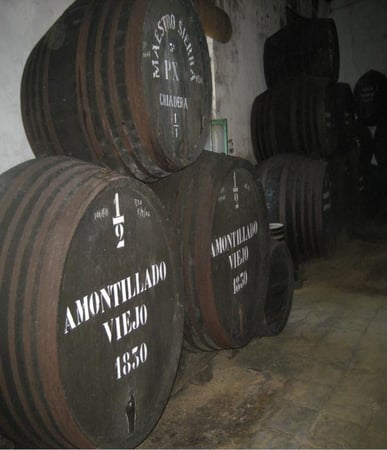
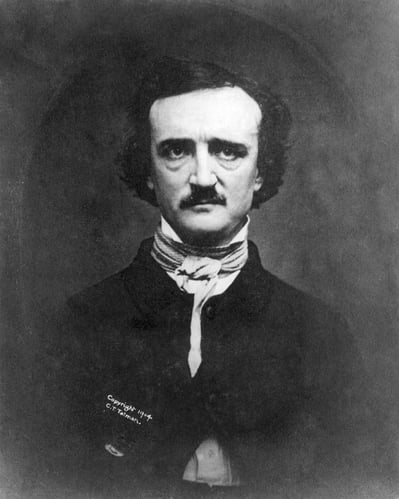
Historical Background: Who Was Edgar Allen Poe?
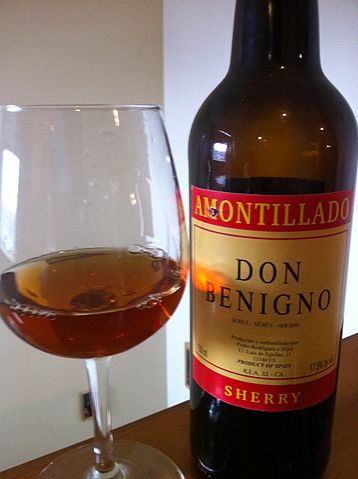 Here'southward what amontillado looks like!
 The Cask of Amontillado Background

The Cask of Amontillado Summary
The Story Begins
Setting the Trap
Entering the Vaults
The Cease of Fortunato
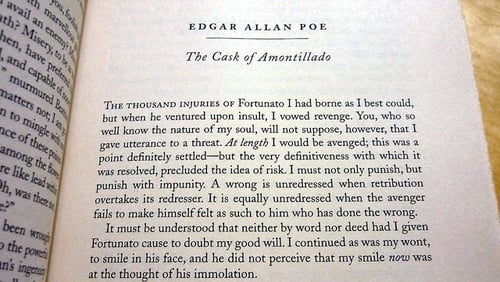
"The Cask of Amontillado" Character Analysis
Fortunato
Montresor
Luchresi
Unnamed Listener

The three Fundamental The Cask of Amontillado Themes
The Unreliability of Perception
The Danger of Pride
The Power of Revenge

At present What?

Ashley Sufflé Robinson has a Ph.D. in 19th Century English language Literature. Every bit a content writer for PrepScholar, Ashley is passionate nigh giving college-bound students the in-depth information they demand to get into the schoolhouse of their dreams.
Source: https://blog.prepscholar.com/the-cask-of-the-amontillado-summary-themes
0 Response to "The Cask of Amontillado Reading in Elements of Literature Book 9th Grade"
Post a Comment